Is your AC running nonstop, yet some rooms still feel sticky or warm? In Southwest Florida, long cooling seasons and coastal weather can drive up bills and test your home’s comfort. With the right upgrades, you can lower costs, boost comfort, and add storm‑season resilience, often with help from local rebates and time‑limited federal credits. Here is a clear plan tailored to our Gulf Coast climate, with notes for Jacksonville readers too. Let’s dive in.
Why energy upgrades matter here
Cooling dominates electricity use in Florida homes, often accounting for a large share of your bill. Local utilities note that air conditioning can drive significant usage, especially during hot, humid months. If you have noticed bill spikes during heat waves, you are not alone. JEA’s guidance on electric spikes explains the pattern and why AC systems are central to savings.
Storms and flooding add another layer. You want upgrades that cut heat gain and also support resilience. The state emphasizes flood awareness and preparation across coastal areas. Review Florida’s flood facts and safety guidance as you plan any improvements.
Start with the fastest wins
HVAC tune‑up and duct sealing
If your ducts run through a hot attic, leaks can waste cooling before it reaches your rooms. A professional HVAC tune‑up with duct sealing can meaningfully reduce runtime and improve airflow at a relatively low cost. See ENERGY STAR’s guidance on sealing and insulating to understand how air leaks drive bills and discomfort.
Attic air sealing and insulation
In our climate, most heat enters through the roof and attic. Air sealing first, then adding insulation, reduces heat flow and helps your AC work less. Done right, this is one of the highest‑value upgrades for Florida homes. Review ENERGY STAR’s attic upgrade overview for what a proper job looks like.
Smart thermostat and simple settings
A smart thermostat that is properly installed and programmed can trim cooling energy with better schedules and humidity‑aware controls. Some utilities also offer demand response programs that add bill credits. Field studies summarized by the Building America program show savings in the single‑ to low‑double‑digit range. Explore resources compiled by the Building America Partnership.
High‑impact upgrades for Southwest Florida
High‑efficiency heat pumps and mini‑splits
Modern central heat pumps or ductless mini‑splits can lower energy use while improving humidity control. Mini‑splits are especially helpful for rooms that never cool evenly or where attic ducts are leaky. DOE and national labs have documented how well‑placed mini‑splits can cut losses and reduce runtime. Learn more from PNNL’s mini‑split resource guide.
Practical tips:
- Ask for proper load calculations that account for Florida humidity.
- Seal and balance ductwork before or during a system upgrade.
- Check incentives and timing for federal credits using the IRS energy credit FAQs.
Heat pump water heaters
A heat pump water heater uses far less electricity than a standard electric tank, often saving hundreds of dollars per year for larger households. It also helps dehumidify the surrounding space. See an overview of how these systems work and typical savings from EnergyRight’s guide.
Jacksonville note: JEA lists a $350 rebate for heat pump water heaters and a $50 smart thermostat rebate on its residential rebates page.
Window shading, films, and low‑E options
Solar heat through windows is a big source of heat gain. Exterior solutions like solar screens, shade structures, and properly placed landscaping are often more cost‑effective than full window replacement. Quality window films can also help. If you are replacing windows for other reasons, low‑E glass can reduce solar gain while meeting coastal code requirements when installed to code.
Cool and reflective roofs
Light‑colored or reflective roofing reduces roof surface temperatures, which lowers attic heat and peak cooling demand. The benefit depends on your roof type, insulation, and shading. Get background and tools from the Cool Roof Rating Council’s homeowner resources at coolroofs.org.
Solar plus battery for resilience
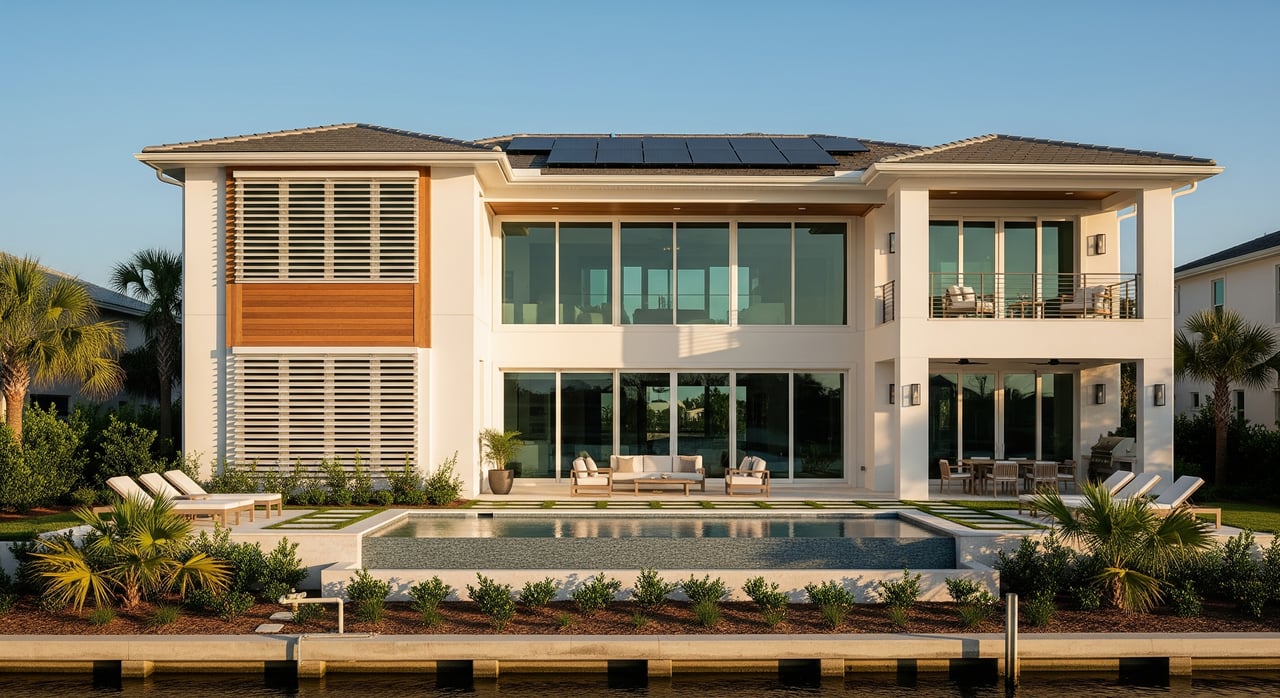
Solar can offset your grid use, and a battery can keep key circuits powered during outages. Economics vary with your roof, shading, and utility rules, and incentives are time sensitive. For credit details and current guidance, see the IRS clean energy credit resources and the updated OBBBA FAQs on 2025 changes.
Plan the work and timing
Sequence that saves
Follow this order to maximize results and avoid oversizing equipment:
- Energy audit and HVAC assessment.
- Air sealing and attic insulation plus duct sealing.
- HVAC replacement or a targeted mini‑split.
- Heat pump water heater and any panel upgrades.
- Solar, battery, and EV charger after loads are right.
This approach aligns with ENERGY STAR’s home upgrade guidance.
Rebates and 2025 federal deadlines
- Federal credits: IRS guidance indicates that major residential credits under Sections 25C and 25D will not apply to property placed in service after December 31, 2025, based on changes enacted in 2025. Confirm current rules in the IRS energy credit FAQs and the OBBBA update, and consult your tax professional.
- Local utility rebates: amounts and eligibility change. In Jacksonville, see JEA’s residential rebates page. In much of Southwest Florida, FPL offers programs for insulation and HVAC; review current offerings summarized on this FPL efficiency program overview and check FPL directly for the latest details.
- Energy audits: many utilities provide free or subsidized home assessments. For context on local efforts, see the DOE’s Jacksonville program page, then contact your utility about current options.
Permits, code, and the right contractors
Major work like HVAC replacements, roofing, electrical panel upgrades, and solar typically requires permits and must comply with Florida Building Code. State statutes outline these requirements and energy provisions. Review the applicable sections at the Florida Legislature site. Florida’s energy code is updated regularly and meets or exceeds national standards for low‑rise homes, per the ACEEE residential codes database.
Use this quick contractor checklist:
- Verify licensing and insurance, plus coastal installation experience.
- Request load calculations, duct leakage test results, and efficiency ratings.
- Get a written scope with line‑item pricing and a clear payment schedule.
- Confirm who handles permits, inspections, and rebate paperwork.
- For solar and batteries, ask for module and inverter specs and interconnection steps.
Southwest Florida move or remodel plan
If you are upgrading a current home or preparing a property for sale, target the measures above that improve comfort and humidity control first. If you are buying, factor energy upgrades into your offer strategy and budget, especially for older roofs, ducts, or HVAC systems. Thoughtful improvements can enhance day‑to‑day comfort and the long‑term value of your home along the Paradise Coast.
If you want neighborhood‑level guidance before you buy or sell, or introductions to trusted local vendors, reach out to Chad Phipps for a straightforward, local plan.
FAQs
What are the best first energy upgrades for a Southwest Florida home?
- Start with an energy audit, then seal ducts and the attic, and optimize your HVAC settings; these steps often deliver the quickest cooling savings in our climate. See ENERGY STAR’s sealing and insulation guidance.
How do 2025 federal energy tax credits affect Florida homeowners?
- IRS guidance indicates key residential credits under Sections 25C and 25D end for property placed in service after Dec 31, 2025; check the IRS FAQs and the OBBBA update and consult your tax advisor.
Are cool roofs worth it in Naples and Marco Island?
- Often yes, but results vary with roof type, insulation, and shading; review homeowner tools at the Cool Roof Rating Council and discuss options with a licensed roofer.
Should I replace windows or use shading and films in Southwest Florida?
- Exterior shading and solar screens or films can be very cost‑effective; consider full window replacement when addressing other needs like storm protection or end‑of‑life frames.
Where can Jacksonville homeowners find current rebates for energy upgrades?
- Start with JEA’s residential rebates page for insulation, HVAC tune‑ups, heat pump water heaters, and smart thermostats.
Do I need permits for HVAC or solar upgrades in Florida?
- Usually yes; HVAC, roofing, electrical, and solar work generally require permits and must meet Florida Building Code, which you can review via the Florida statutes website.