Most Pelican Bay comparisons start with the same two numbers: list price and monthly dues. Neither one tells you how this market changed in 2026, and neither one explains why a buyer choosing between a Gulf-view tower and a single-family home in Oakmont is now making a very different bet than the price tags suggest.
The number that matters this year isn't a dollar figure. It's a chapter of Florida law.
Florida's Reserve Requirements for 2026
For the better part of two decades, Florida condominium boards had a waiver option. If reserve funding for a roof, a load-bearing wall, or a building's plumbing system looked expensive, owners could vote to waive it and keep monthly dues lower. That option is gone. Under House Bill 913, which built on the post-Surfside reforms to Florida Statute 718.112, condo and co-op associations covered by the Structural Integrity Reserve Study requirement lost the ability to waive or reduce those reserves for budgets adopted from 2025 forward. By January 1, 2026, the grace period had fully expired.
The mechanics are specific. Structural Integrity Reserve Studies cover eight components, as PropFusion's guide describes: roof, load-bearing structural elements, fireproofing and fire protection, plumbing, electrical, waterproofing, windows and doors, and any other item over roughly $25,000 that affects structural integrity, as BuildingMavens explains. Once that study is filed, the association has to fund it in full. No partial funding, no owner vote to defer.
For buildings that had been underfunding reserves for years, the arithmetic changed overnight. Boards facing a funding gap still have to find the money somewhere. The HOA Guide reports that special assessments tied to this transition have ranged from a few thousand dollars to well over $100,000 per unit for major structural catch-up work. Failure to comply carries its own consequences, including daily fines, as M2E explains. You can read the full mandate directly from Florida's Division of Condominiums or the text of HB 913 itself.
Ninety-Five Associations, One Line in the Statute
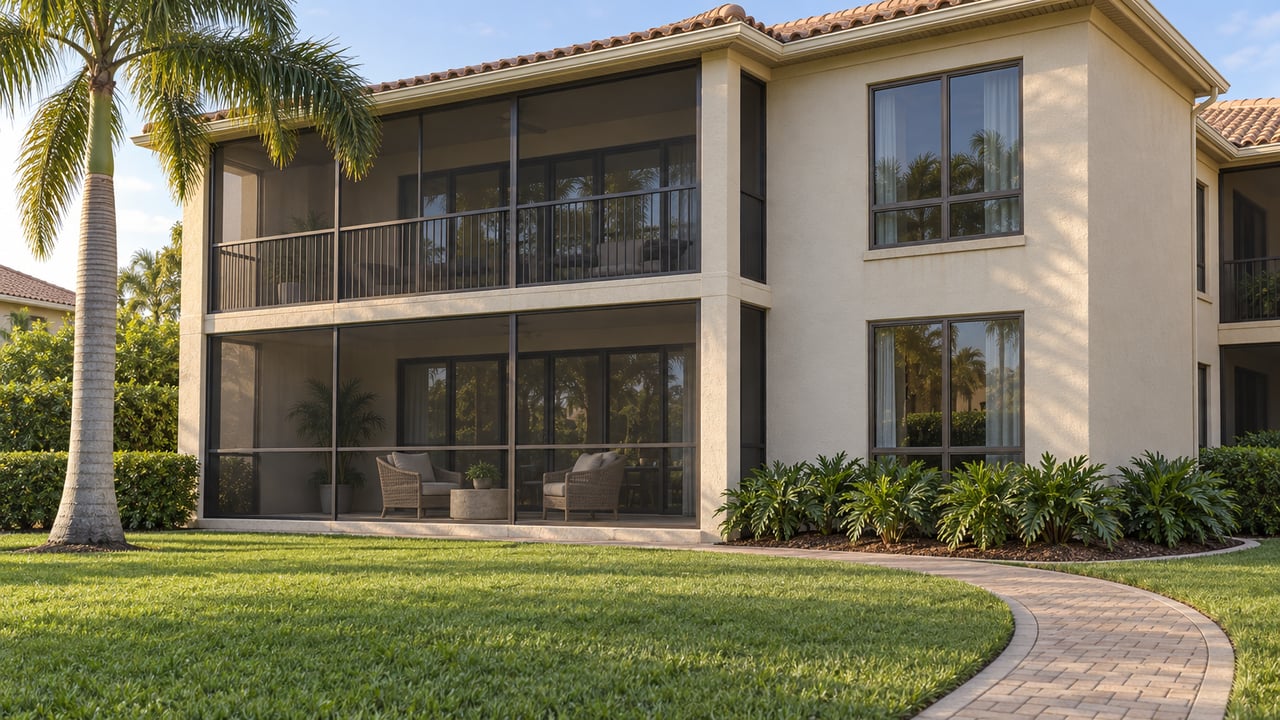
Pelican Bay isn't one HOA. It's a master-planned community of roughly 6,500 residences spread across 95 distinct associations, every one of them a member of the Pelican Bay Foundation for beach, tram, and community center access. Some of those associations are high-rise towers with full concierge staff. Marbella, for example, runs a service-heavy model with room service, formal dining, and an on-site beauty and barber shop, the kind of building where dues fund a hospitality operation as much as a roof. The 22-story Stratford carries the operating profile of a classic Pelican Bay high-rise. Lower-rise buildings like Serendipity and Calais run leaner budgets with smaller staffs and simpler shared systems.
What all of those buildings share, regardless of how much staff or marble they carry, is a governing chapter of Florida law. Condominiums fall under Chapter 718, which is where the Structural Integrity Reserve Study requirement lives. Single-family homes and Pelican Bay's master Foundation fall under Chapter 720, which has no equivalent mandate.
That distinction separates the community by reserve requirements, not by view, price, or square footage.
| SIRS-covered condo or co-op tower | Oakmont single-family home | |
|---|---|---|
| Governing statute | Chapter 718 | Chapter 720 (Foundation membership) |
| Subject to SIRS mandate | Yes | No |
| Who owns the roof, walls, plumbing | The association | The individual homeowner |
| Reserve waiver still legal | No, eliminated for SIRS components | Not applicable |
| Foundation-level costs | Same across the community | Same across the community |
Everyone in Pelican Bay still pays into the Foundation. Nobody outruns hurricane exposure or the cost of maintaining a coastal home. But the specific legal mechanism now forcing catch-up reserve funding and, in some buildings, real special assessments, only reaches into one column of that table.
What Oakmont Owners Actually Pay
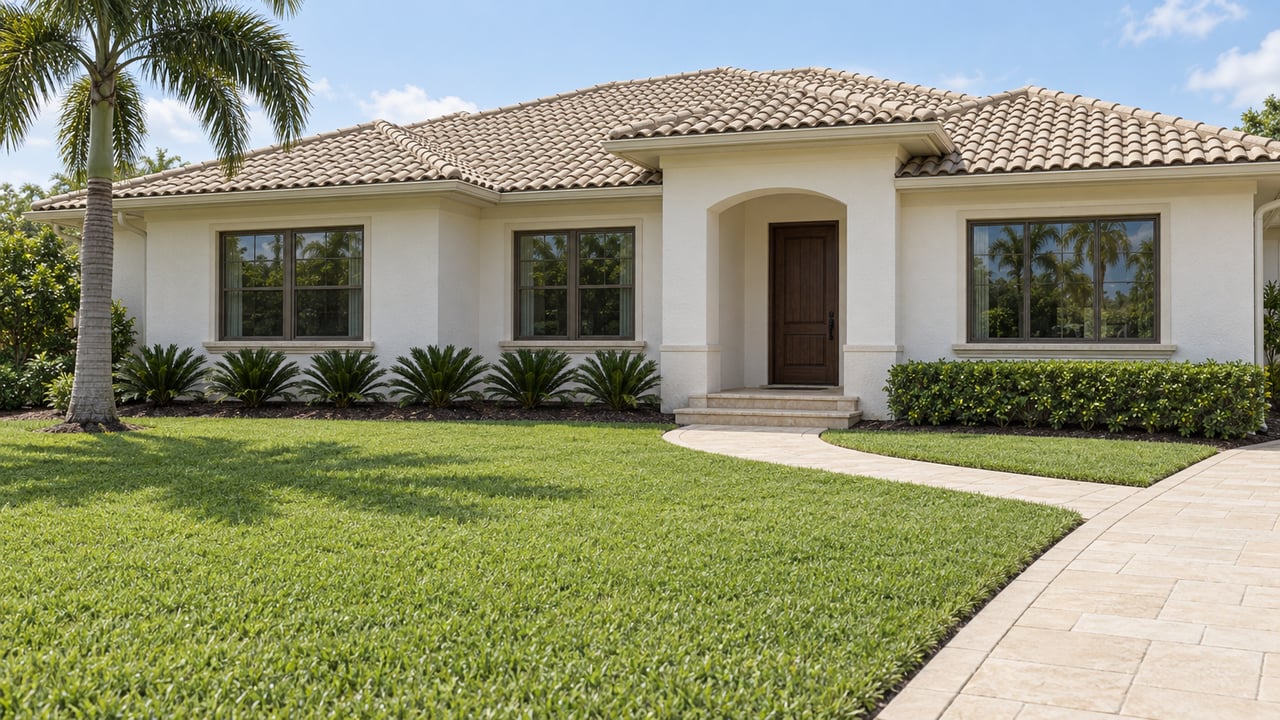
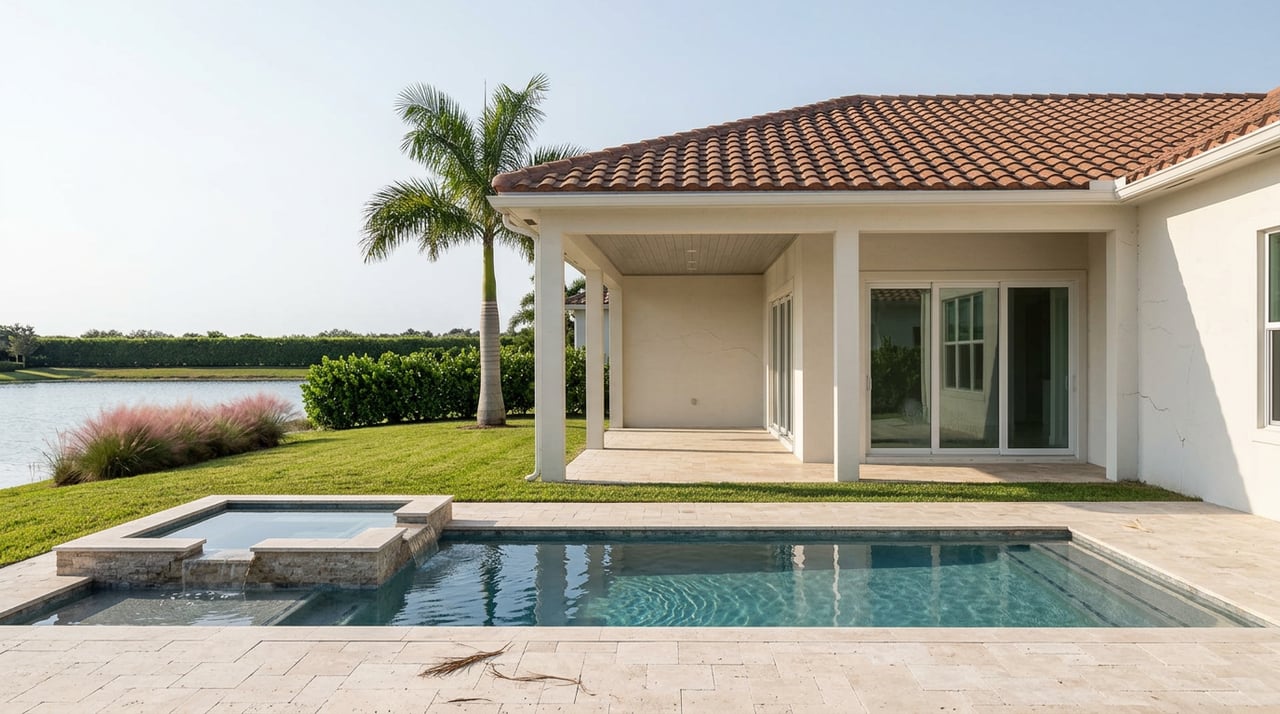
Oakmont is the largest detached-home neighborhood in Pelican Bay, 133 homes on cul-de-sacs and lakeside lanes in the north-central section of the community, most of them built between 1987 and the early 1990s. Owners pay the Pelican Bay Foundation's annual assessment, and in some cases a modest contribution to Oakmont's own neighborhood fund, and that's the extent of the shared-governance layer.
Published figures for the Foundation's FY2026 annual assessment vary depending on the source and fiscal-year snapshot, ranging from a bit over $2,000 to roughly $3,295 per assessable unit. Buyers should confirm the current number directly with the Foundation rather than anchoring on any single published figure. On top of that sits a Collier County Pelican Bay Services Division non-ad-valorem assessment, which has run somewhere between roughly $1,000 and $1,550 per year depending on the fiscal year and property classification.
None of those Foundation-level costs disappear for an Oakmont buyer. What disappears is the second layer, the condominium association budget that has to absorb SIRS-driven reserve funding, insurance premium spikes tied to structural risk, and the possibility of a special assessment notice arriving in the mail. Oakmont's active rebuild market, where original 1980s homes trade alongside new construction pricing from the low $2 millions to $6 million or more, reflects a neighborhood where the ownership cost structure has stayed comparatively simple even as the surrounding condo market absorbs legislative changes.
The Market Is Already Pricing the Difference
This isn't a theoretical distinction. By a mid-2026 snapshot, Pelican Bay condos overall were averaging roughly 150 days on market, a stretch that outside market commentary attributes directly to the post-Surfside reserve era repricing older buildings. Towers facing known assessments or unresolved reserve gaps are sitting longer and giving buyers real negotiating room. Remediated and newer buildings, by contrast, are holding firm on price.
In 2025, Pelican Bay's signature Gulf-view and bay condos averaged about $2.18 million, or roughly $835 per square foot, while single-family homes in the community averaged closer to $3.62 million, or about $1,032 per square foot, with the year's top sale reaching around $15.5 million. Single-family product has always carried a premium in Pelican Bay. What's new in 2026 is that the premium now comes bundled with something buyers can actually price: the absence of SIRS exposure. A buyer comparing a $2 million condo against a $2 million-plus Oakmont renovation isn't just comparing square footage and finishes anymore. They're comparing which chapter of Florida law governs their future liability.
Four Questions Worth Asking Before You Assume You're Insulated
Buying single-family in Oakmont removes SIRS exposure, but it doesn't remove every question a careful buyer should ask.
- Confirm the Foundation's own reserve health. The Foundation itself maintains shared infrastructure, beach facilities, and the tram system. It isn't subject to SIRS, but it still has its own capital planning, and it's worth asking what's funded and what isn't.
- Get the current assessment figure in writing. Given how much published numbers vary by source and fiscal year, don't rely on a listing sheet. Ask the Foundation directly for the current annual assessment and the PBSD line as they'll appear on your first full year of ownership.
- Ask about the Oakmont contribution. Confirm what it funds and whether that's likely to change.
- Don't skip wind and flood insurance shopping just because there's no SIRS. Hurricane exposure is a community-wide reality in coastal Collier County, and a single-family home carries its own roof, its own windows, and its own insurance renewal, independent of any association.
A Few Short Answers
Does Oakmont have any SIRS-related exposure at all? No. The Structural Integrity Reserve Study requirement is part of Chapter 718. Oakmont's single-family homes and the Pelican Bay Foundation itself fall under Chapter 720, which has no equivalent structural reserve mandate.
Could that change? Florida's legislature has continued to amend this law almost every session since 2022, and lawmakers introduced at least one 2026 bill that would have adjusted SIRS applicability before it died in committee. The current framework exempts single-family and HOA-governed properties, but buyers should treat that as the current rule rather than a permanent one.
Does this mean condo towers in Pelican Bay are a bad buy? Not at all. Many buildings have already completed their studies and are fully funded, and the extended days-on-market figures reflect real price adjustment happening in real time. It means the SIRS report and the association's funding status deserve the same scrutiny as square footage and view.
If you're weighing a Pelican Bay tower against a home in Oakmont, a useful comparison starts with the association documents alongside the listing photos. Chad Phipps has spent more than two decades tracking exactly this kind of structural and financial detail across Naples' gated and coastal communities, and can walk you through a specific building's reserve status or Oakmont's current inventory before you write an offer. Reach out for an instant home valuation and a local market consultation built around what you're actually buying into.
This article is general information, not legal, tax or financial advice. Consult a qualified professional about your situation.